Eh sì, lo so: abbiamo perso l’abitudine di fare cose che un tempo si praticavano anche solo come passatempo. Oggi per molti, giovani e meno giovani, lo svago più ricorrente è scrollare sui social, chattare o conversare con la nuova arrivata, l’Intelligenza Artificiale.
Nessuno però ci vieta di riprendere in mano i lavoretti che vedevamo fare dalle nostre Nonne. Le persone della mia generazione (1953) ricorderanno di aver visto tante casalinghe e non solo, lavorare con l’uncinetto, con ago e filo o con i ferri da maglia, tutte dimostravano una grande abilità nel personalizzare le loro creazioni. Perfetto esempio di crafting, come si direbbe oggi.
Anche a scuola ci indirizzavano verso queste attività. Ricordo che negli anni ’60, tra i libri di matematica, scienze, italiano e geografia, c’erano gli attrezzi per l’ora di economia domestica. Nella mia classe (st. John’s School) imparammo a cucire con ago e filo un set da colazione in stoffa a quadretti, ricamandolo a punto croce, e a realizzare un berretto di lana, dove ci insegnarono ad aggiungere diversi colori per fare le righe. Oggi la ricerca ci suggerisce di praticare questi lavori manuali come terapia, per ritrovare una dimensione di calma e un ritmo più lento (take it easy) che ci è sfuggito di mano a causa della frenesia quotidiana.
Imparai a lavorare all’uncinetto all’età di 15 anni (1968).
Era inverno ed ero arrivata da poco in paese dalla lontana Australia. Un giorno la Zia Beppa, un’anziana Zia di mio Babbo, mi invitò a casa sua per desinare. Mi disse: «Emma, oggi ho deciso di prepararti i bruciaioli, un piatto tipico di questa stagione. La raccolta delle castagne è stata buona e la farina ha un profumo intenso». Risposi: «Grazie Zia, non vedo l’ora di assaggiarli!». Non sapevo cosa fossero né come si cucinassero, ed ero molto curiosa di scoprirlo.
Nel piatto si presentarono come una polentina morbida, accompagnata da una ciotolina di ricotta fresca e da un bicchiere di latte freddo. Iniziai a mangiare con appetito, prestando molta attenzione ai sapori per poter dare il mio giudizio. Mi piacquero con entrambi i contorni, ma la combinazione con la ricotta esaltava al massimo il buon gusto della farina. Mi complimentai con lei, e da allora, i bruciaioli sono rimasti la mia ricetta preferita per le fredde giornate d’inverno.
Quello stesso giorno, dopo aver lavato i piatti e riordinato la cucina, la Zia mi mostrò i suoi lavori all’uncinetto. Rimasi sbalordita dalle trine, e centrini fatte con un filato finissimo, ogni maglia era eseguita con una precisione impeccabile.
Mi chiese: «Ma te sei capace di lavorare all’uncinetto?». La mia risposta fu ovvia: «No Zia, non ho mai preso in mano l’uncinetto, e non conosco questa tecnica!». «Allora ti insegno io», propose. Da quel momento l’uncinetto è diventato uno strumento che non mi ha più abbandonata.
Mia mamma, invece, non ha mai lavorato le trine, perché amava il ricamo, era una vera ricamatrice.
Più tardi nel tempo, lavorando nell’azienda tessile CCC, era facile acquistare i filati, ed i prezzi erano molto convenienti per i dipendenti. Anche dopo essermi sposata ho realizzato tante belle cose per i miei figli, come un cappellino estivo arancione per mia figlia quando aveva due anni, e un completino, di pantaloncini e gilè fatti con i ferri per mio figlio.
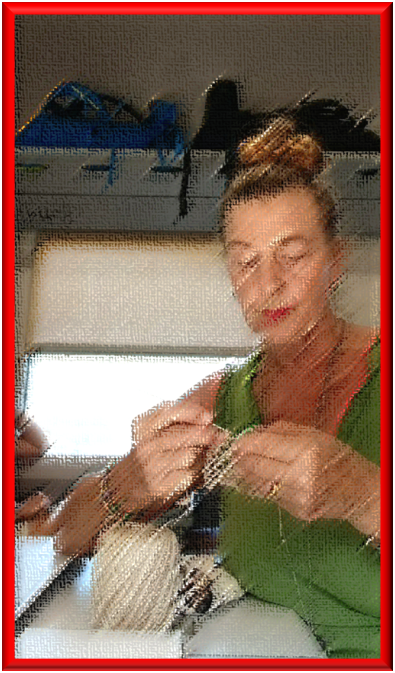
Oggi, per combattere la noia quando viaggio in treno, tra dare un occhiata sui social e la lettura di un libro, o scrivere qualcosa con l’Ipad in un angolo del mio zaino c’è sempre posto per un gomitolo di filato e un uncinetto. Anche se non ho un’idea definita sul progetto da realizzare, mi basta averli con me.

Non voglio perdere questa abitudine.
Mi piaceva osservare quelle donne mentre lavoravano, trasmettevano una grande serenità, e non erano mai stressate, per questo:
“RILANCIAMO L’HOBBY DELL’UNCINETTO”.
TRANSLATION:
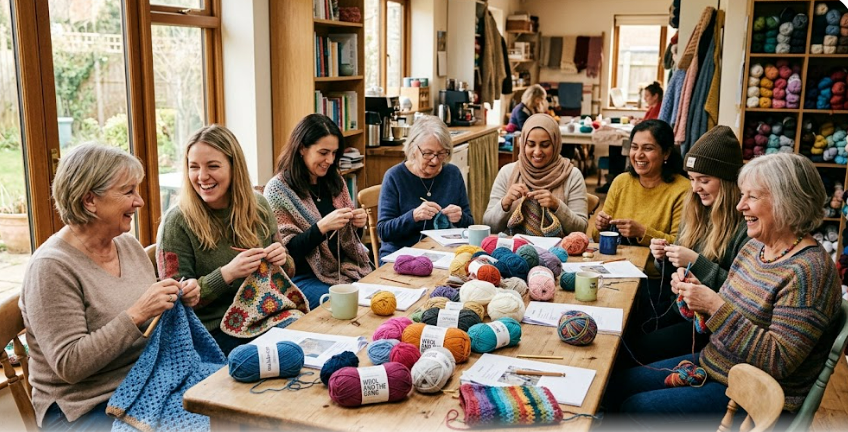
Beloved crochet… let’s take a step back and revive the art of crochet.
Yes, I know: we’ve lost the habit of doing certain things that were once practiced simply as pastimes. Today, for many young and old, the most common form of leisure is scrolling through social media, chatting, or conversing with that newcomer: Artificial Intelligence.
Yet, nothing stops us from picking up the kinds of projects we used to see our grandmothers working on. People of my generation (born in 1953) will remember seeing so many women, housewives and others, working with crochet hooks, needle and thread, or knitting needles, all displaying great skill in personalizing their creations. A perfect example of what we would call “crafting” today.
We were steered toward these activities at school, too. I remember that in the 1960s, alongside our math, science, Italian, and geography books, we had the supplies for craft. In my class (at St. John’s School), we learned to sew a breakfast set, decorating it with cross-stitch, and to knit a wool hat, where we were taught how to incorporate different colors to create stripes. Today, research suggests engaging in these kinds of handicrafts as a form of therapy, is a way to rediscover a sense of calm and a slower pace of life (taking it easy) that has slipped away because of the daily rush.
I learned to crochet at the age of 15 (in 1968).
It was winter, and I had recently arrived in the village from faraway Australia. One day, Aunt Beppa, my Father’s elderly aunt, invited me to her home for a meal. She said, “Emma, today I’ve decided to make *bruciaioli* for you, it’s a dish typical of this season. The chestnut harvest was good, and the flour has a wonderful, rich aroma.” I replied, “Thank you, Auntie, I can’t wait to taste them!” I didn’t know what they were or how they were cooked, but I was very curious to find out.
In the plate, they looked like a soft polenta, served with a small bowl of fresh ricotta and a glass of cold milk. I began to eat heartily, paying close attention to the flavors so I could form an opinion. I enjoyed them with both accompaniments, but the combination with the ricotta truly brought out the delicious taste of the flour. I complimented her on the dish, and ever since then, *bruciaioli* have remained my favorite recipe for cold winter days.
That same day, after washing the dishes and tidying up the kitchen, she showed me aunt showed me her crochet work. I was amazed by the lace and doilies made from incredibly fine thread; every stitch was executed with impeccable precision.
She asked me, “Do you know how to crochet?” My answer was obvious:
“No, Auntie, I’ve never even picked up a crochet hook, and I don’t know the technique!”
“Then I’ll teach you,” she proposed. From that moment on, the crochet hook became a tool that has never left my side.
My mother, on the other hand, never made lace; she loved embroidery, she was a true embroiderer.
Later on, while working at the CCC textile company, it was easy to buy thread, and the prices were very affordable for employees. Even after I got married, I made many lovely things for my children, such as an orange summer hat for my daughter when she was two, and a hand-knitted shorts and vest set for my son.
Nowadays, to stave off boredom while traveling by train, in between checking social media, reading a book, or typing on my iPad, there is always room in a corner of my backpack for a ball of yarn and a crochet hook. Even if I don’t have a specific project in mind, just having them with me is enough.
I don’t want to lose this habit.
I used to love watching those women as they worked; they radiated a great sense of serenity and never seemed stressed. That is why I say:
“LET’S REVIVE THE HOBBY OF CROCHETING.”
